
Giving a Voice Through AAC:
How Augmentative and Alternative Communication Empowers Non-Verbal Children
Communication is the foundation of learning, relationships, and emotional well-being. For many children with special needs—especially those who are non-verbal or minimally verbal—expressing thoughts, needs, and emotions can be a daily challenge. Augmentative and Alternative Communication (AAC) provides a powerful solution by opening new pathways for meaningful communication.
AAC is not about replacing speech. It is about supporting communication, reducing frustration, and empowering children to connect with the world around them.
What Is AAC?
Augmentative and Alternative Communication (AAC) includes a range of tools and strategies designed to help individuals who have difficulty using spoken language.
AAC systems may be:
* Unaided, such as gestures, facial expressions, and pointing
* Low-tech, including picture cards, symbol boards, or communication books
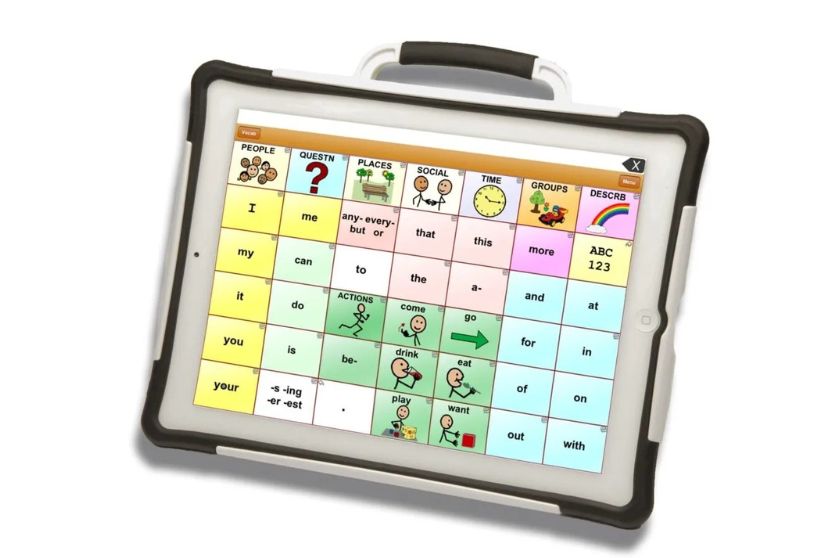
* High-tech, such as speech-generating devices and mobile AAC applications
Through AAC, children can communicate using pictures, symbols, text, or voice output, depending on their individual abilities and needs.
Why AAC Is So Important for Non-Verbal Children
Many non-verbal children understand language well but lack the motor or speech control to express themselves. When communication needs go unmet, this can lead to frustration, behavioral challenges, and reduced participation in learning and social activities.
AAC provides a functional and reliable way to communicate, allowing children to:
* Express basic needs and choices
* Share feelings and preferences
* Participate in learning activities
* Interact socially with peers and adults
Research consistently shows that AAC does not delay speech development . In fact, AAC often supports and encourages spoken language by reducing pressure and creating successful communication experiences.
Key Benefits of AAC for Children with Special Needs
✅ Supports Language Development
AAC helps build vocabulary, sentence structure, and understanding of language, laying a strong foundation for communication growth.
✅ Reduces Frustration and Behavioral Challenges
When children are able to express themselves, frustration decreases, and emotional regulation improves.
✅ Encourages Social Interaction
AAC enables children to greet others, take turns, make comments, and engage meaningfully in social situations.
✅ Enhances Learning and Academic Access
With AAC, children can answer questions, follow instructions, and actively participate in classroom and home-learning activities.
✅ Promotes Independence and Confidence
AAC empowers children to make choices, express preferences, and advocate for their needs.
AAC for Children with Cerebral Palsy and Other Developmental Conditions
Children with Cerebral Palsy, Autism Spectrum Disorder, Down syndrome, developmental delays, apraxia of speech, and neurological conditions often benefit significantly from AAC.
For children with Spastic Cerebral Palsy, AAC is particularly valuable because it:
* Compensates for speech motor difficulties
* Can be accessed through touch, eye gaze, or switch control
* Supports communication even when physical movement is limited
AAC works best when integrated with speech therapy, occupational therapy, physiotherapy, and individualized educational planning.
Parent-Friendly and Accessible AAC Apps
Thanks to technology, AAC is now more accessible and affordable for families. Many effective AAC tools are available as mobile applications that work on tablets and smartphones.
Popular and easy-to-use AAC apps include:
Proloquo2Go – highly customizable and widely used
TouchChat HD – structured and supportive for learning
LAMP Words for Life – based on motor planning principles
CoughDrop – cloud-based and budget-friendly
Avaz AAC – user-friendly and ideal for beginners
A speech-language therapist can help families select and customize the most appropriate AAC system for their child.
How Families and Educators Can Support AAC Use
Successful AAC use depends on consistency and encouragement. Families and educators can support AAC by:
* Using AAC during everyday routines
* Modeling communication using the AAC system
* Encouraging choice-making and interaction
* Celebrating all communication attempts
* Integrating AAC into play, meals, and learning
AAC is most effective when it becomes a natural part of daily life, not just a therapy tool.
AAC and Individualized Education Plans (IEPs)
AAC plays an important role in educational planning. In an IEP, AAC should be recognized as:
* A communication support
* A learning access tool
* A behavior regulation strategy
Clear AAC goals help ensure the child can communicate effectively across all environments.
Every child deserves a way to express themselves. AAC gives a voice to children who cannot rely on speech alone, helping them communicate, learn, and connect with others. With today’s accessible AAC apps and supportive guidance, families and educators can create meaningful communication opportunities that change lives.
AAC is not a last resort—it is a powerful tool for connection, learning, and inclusion.