
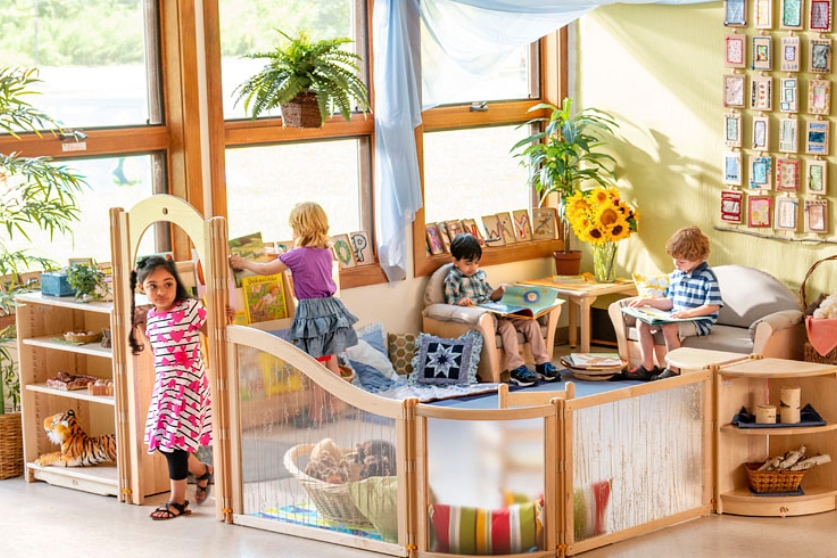
Creating a Sensory-Friendly Learning Environment at Home: More Than Just a Quiet Corner
Let’s start with a truth bomb: The kitchen table was not designed for every learner.
For a child with sensory processing differences, that table might as well be a minefield. The hum of the fridge is a distracting buzzsaw. The overhead light flickers like a strobe. The chair is too hard, the tags on clothes are itchy, and the smell of last night’s dinner still lingers. What looks like “fidgeting” or “avoidance” is often a nervous system in overdrive, just trying to survive.
Creating a sensory-friendly learning space at home isn’t about building a soundproof bubble. It’s about becoming a sensory detective —observing your child, identifying their unique needs, and thoughtfully crafting an environment where their nervous system can feel safe enough to focus, explore, and learn.
Think of it as lowering the “background noise” of the world so their brilliant brain can tune into the task at hand.
Step 1: The Sensory Audit – See Your Space Through Their Eyes
Before you buy a single thing, spend a day observing. Get on their level—literally. Sit where they sit.
. Sight: Is the room visually cluttered? Are posters and artwork overwhelming? Do fluorescent lights hum or flicker? Is sunlight glaring on the screen?
. Sound: What’s the background soundtrack? HVAC hum, traffic, ticking clocks, dishwasher cycles, sibling noises? Sudden, unpredictable sounds are often the biggest culprits.
. Touch: How do the surfaces feel? Is the chair fabric scratchy? Is the desk too cold or sticky? Are their clothes cooperative?
. Smell: Are there competing odors? Scented candles, cleaning products, strong food smells?
. Movement & Space: Can they move without bumping into things? Is there a way to get proprioceptive input (deep pressure) or vestibular movement (swaying, rocking) if they need to regulate?
Step 2: Build Your Sensory Toolkit – Strategies, Not Just Stuff
You don’t need a full-room renovation. Small, intentional changes can be transformative.
For the Overwhelmed Child (Sensory Seeker/Avoider):
Create a “Just Right” Workstation:
. Seating: Swap a typical chair for a wobble stool, a cushioned disc, or even an exercise ball. It allows for movement that feeds the brain.
. Surface: Use a non-slip mat or a simple clipboard to define the work area and prevent papers from sliding.
. Focus: Try a study carrel (you can make one from a cardboard box!) or a simple partition to create visual boundaries and reduce peripheral distractions.
. Tame the Lighting: This is a game-changer. Ditch overhead lights when possible. Use floor lamps, desk lamps with warm LED bulbs, or natural light. For kids sensitive to light, try a flexible-arm desk lamp to focus light exactly where it’s needed, or provide a baseball cap to create a “visor” effect.
. Manage Sound: Offer noise-reducing headphones (not noise-cancelling, which can feel eerie) or soft, foam earplugs. For some, calm, instrumental music or white noise (like a fan or a sound machine) can mask jarring background noise.
. Organize for Calm: Use simple, labeled bins (picture labels for pre-readers) to reduce visual clutter. A clear “in” and “out” tray for work can create predictable structure.
For the Under-Stimulated Child (Sensory Seeker):
. Incorporate Movement Before and During Work: Start with 10 minutes of heavy work— wall pushes, animal walks, carrying a heavy book basket. Build in active breaks: chair push-ups, using a chewy necklace, sitting on a wobble cushion.
. Provide Fidgets with a Purpose: The key is fidgets that don’t require visual attention . Think theraputty hidden under the desk, a textured strip taped to the table edge, or a simple rubber band on the chair leg. The rule: “If it’s distracting you or me, let’s try a different tool.”
Step 3: Establish Sensory Routines & Rituals
Predictability is soothing. Build sensory regulation into the schedule itself.
. The “Five-Minute Reset”: Before a focused task, offer a choice: “Do you need a bear hug, a wall push-up, or to spin three times to get your body ready?”
. The “Learning Snack” : Break work into 15-20 minute chunks followed by a 5-minute sensory motor break (jumping on a mini-tramp, rolling over an exercise ball, swinging).
. The “Check-In Chart”: Use a simple visual chart with faces (e.g., “My engine is running too high, just right, too low”). Teach your child to identify their sensory state and choose a tool from a corresponding menu (e.g., “too high” = heavy work, deep pressure; “too low” = crunchy snack, jumping jacks).
Remember: The Goal is Regulation, Not Perfection
Some days, the best sensory-friendly environment might be a blanket fort with a flashlight and a clipboard. Other days, it might be working while lying on the floor. That’s okay.
You are not creating a rigid laboratory. You are creating a flexible, responsive base camp—a place where your child’s nervous system feels understood and supported. When their sensory needs are met, the barriers to learning begin to fall away, revealing the curious, capable learner who was there all along.
Start small . Pick one thing from this list—maybe swapping a light or introducing a wobble seat—and observe. You’ve got this. And remember, the most important sensory tool in the room is you: your calm presence, your willingness to experiment, and your deep belief in their ability to learn in the way that works best for them.
What’s one small sensory change that made a big difference in your home? Was it a lamp, a certain fidget, or a new routine? Share your wins in the comments—your insight might be the exact tip another parent needs today.